Author: M J

  • From 60-Hour Weeks to 40: How One Small Business Used AI to Reclaim Work-Life Balance

    From 60-Hour Weeks to 40: How One Small Business Used AI to Reclaim Work-Life Balance

    How AI Saved Our Small Business Time and Stress

    Meet Jane, a small business owner who once juggled 60-hour work weeks. Discover how she leveraged AI to transform her operations and reclaim her work-life balance, setting an inspiring example for small business owners everywhere.

    The Challenge: Overworked and Overwhelmed

    A stressed small business owner overwhelmed with work
    Photo by RDNE Stock project on Pexels

    Jane’s daily routine was a marathon of tasks that seemed never-ending. With a small team and a growing list of clients, she found herself working late nights and weekends just to keep up. Her personal life suffered, and the constant stress began to take a toll on her health and happiness.

    “I felt like I was on a treadmill that never stopped,” Jane recalls. “My work-life balance was non-existent.”

    Not only did this impact her well-being, but it also stifled the potential growth of her business. Jane needed a way to manage her workload more efficiently to focus on strategic planning and customer service improvements.

    Discovering AI: A Game-Changer for Small Business

    AI-powered tools for small business operations
    Photo by Hatice Baran on Pexels

    Everything changed when Jane stumbled upon a webinar about AI solutions for small businesses. Intrigued by the possibility of technology easing her burdens, she learned about various AI tools that could automate routine tasks and provide 24/7 customer support. It was through this exploration that she discovered Lumabot, an AI agent designed specifically for small businesses like hers.

    “Finding Lumabot was a turning point,” Jane says. “It was the practical, actionable solution I had been searching for.”

    Implementing AI: The Transition Process

    Small business implementing AI technology
    Photo by Matheus Bertelli on Pexels

    Integrating AI into her business was not without its challenges. Jane began by identifying key areas where AI could have the most impact, such as customer inquiries and appointment scheduling. She invested time in training herself and her staff to use Lumabot effectively, overcoming initial adaptation hurdles with persistence and support from the Lumabot team.

    Here are some steps Jane followed for a smooth integration:

    • Identified repetitive tasks suitable for automation.
    • Set clear goals for what she wanted to achieve with AI.
    • Engaged in comprehensive training and leveraged available resources.
    • Regularly reviewed AI performance and made necessary adjustments.

    Reaping the Benefits: Work-Life Balance Restored

    A happy small business owner after using AI
    Photo by RDNE Stock project on Pexels

    The results were transformative. With AI handling routine tasks, Jane’s workweek reduced from 60 to a manageable 40 hours. This newfound efficiency not only improved her personal life but also enhanced her business’s operational capabilities. Customer service saw significant improvements, with Lumabot providing 24/7 support and ensuring no inquiry went unanswered.

    “AI gave me my life back,” Jane beams. “Now, I can focus on growing my business without sacrificing my personal time.”

    Lessons Learned: Advice for Fellow Business Owners

    Small business owner sharing advice on AI integration
    Photo by RDNE Stock project on Pexels

    Jane’s journey offers valuable lessons for other small business owners considering AI integration:

    • Start small, focusing on areas where AI can provide immediate benefits.
    • Take advantage of training resources and support from your AI provider.
    • Regularly assess the impact of AI on your business and make adjustments as needed.

    Embracing technology doesn’t mean compromising on quality. Instead, it can lead to a better work-life balance and more time to focus on strategic growth.

    Reflect on the transformative power of AI in small businesses, reinforcing that technology can enhance both operational efficiency and personal well-being.

    Call-to-Action: Try Lumabot risk-free for 14 days and experience the transformation yourself.
  • Automate 5 Small Biz Tasks with AI Now

    Automate 5 Small Biz Tasks with AI Now

    Automate 5 Small Biz Tasks with AI Now

    In the fast-paced world of small business, time is your most valuable asset. Imagine what you could achieve if you could automate routine tasks effortlessly, without the need for a tech team. This week, leverage AI to revolutionize your operations and focus on what truly matters.

    Streamline Customer Service with AI Chatbots

    AI chatbot providing customer support
    Photo by Airam Dato-on on Pexels

    Implementing AI chatbots for 24/7 customer support is a game-changer. These digital assistants can handle routine inquiries, freeing up your time and resources. By reducing response time, you’ll see a significant increase in customer satisfaction. With solutions like Lumabot features, integrating AI chatbots into your customer service strategy is both practical and actionable.

    “AI chatbots enhance customer satisfaction by providing instant responses to inquiries.”

    Automate Social Media Management

    AI tools managing social media
    Photo by Bastian Riccardi on Pexels

    Managing social media can be a time-consuming task, but AI tools can transform this process. By scheduling posts and engaging with followers automatically, you can maintain an active online presence without constant oversight. Analyze engagement data to optimize your strategies and ensure your content resonates with your audience.

    “AI tools streamline social media management by automating post scheduling and engagement.”

    Enhance Email Marketing with AI

    AI personalizing email campaigns
    Photo by Monoar Rahman on Pexels

    Email marketing remains a powerful tool for small businesses, and AI can enhance its effectiveness. With AI, you can personalize email campaigns for better open rates and automate follow-up sequences. Additionally, A/B testing can be automated, allowing you to fine-tune your messaging for maximum impact.

    “Personalized email campaigns yield higher open rates and engagement.”

    Leverage AI for Inventory Management

    AI managing inventory
    Photo by Tima Miroshnichenko on Pexels

    Inventory management can be complex, but AI offers a solution. By predicting stock needs and automating reordering, you can minimize overstock and prevent stockouts effortlessly. This not only saves time but also reduces waste and improves your bottom line.

    Simplify Bookkeeping Processes

    AI automating bookkeeping tasks
    Photo by Matheus Bertelli on Pexels

    Bookkeeping is another area where AI can shine. By integrating AI to automate expense tracking and invoicing, you ensure accurate financial records with minimal effort. This automation frees you to focus on strategic financial planning rather than mundane data entry.

    Embracing AI automation can transform the way your small business operates, allowing you to focus on growth and innovation. By automating these tasks, you can enjoy increased efficiency and improved customer experiences.

    Try Lumabot risk free for 14 days and see how AI can elevate your business operations.

  • Build Trust with AI, Keep Your Team Human

    Build Trust with AI, Keep Your Team Human

    Build Trust with AI, Keep Your Team Human

    In the fast-paced world of radio, staying connected with your audience is key. As AI tools like LumaBot become more prevalent for enhancing efficiency and providing 24/7 support, how can radio DJs leverage these technologies without losing their unique personal touch?

    Understanding the Role of AI in Radio

    AI integration with radio station setup
    Photo by Jacob Hodgson on Unsplash

    Artificial Intelligence has the potential to revolutionize customer service and support in the radio industry. By offering 24/7 support, AI tools like LumaBot can handle routine inquiries, freeing up time for DJs and staff to focus on creating engaging content. This blend of automation and human interaction can enhance the listener experience, providing timely responses while maintaining the warmth that only a human touch can offer.

    Identifying Potential Concerns

    Team discussing AI integration concerns
    Photo by litoon dev on Unsplash

    Despite its potential, the introduction of AI tools can raise concerns among team members, particularly regarding job displacement. It’s crucial to reassure your team that AI is not here to replace them but to augment their capabilities. Maintaining a personal connection with listeners is paramount, and AI should be seen as a tool to help achieve that, not hinder it.

    Strategies for Building Trust with AI

    Team meeting about AI strategies
    Photo by TECNIC Bioprocess Solutions on Unsplash

    Introducing AI gradually and involving team members in the process can build trust and acceptance within your team. Consider the following strategies:

    • Start with non-intrusive applications of AI, like automating mundane tasks.
    • Encourage team input on how AI can assist them in their roles.
    • Showcase how AI can enhance, not replace, the human touch in interactions.

    “AI should be seen as a partner in creativity, not a competitor.”

    Maintaining Company Culture While Adopting AI

    To successfully integrate AI without compromising company culture, create an open dialogue about its role and benefits. Highlight success stories where AI and human teams work together harmoniously. This transparency can alleviate fears and demonstrate AI’s potential as a helpful ally.

    Training Your Team to Use AI Tools Effectively

    Team training in AI tools usage
    Photo by Kobe Kian Clata on Unsplash

    Providing training sessions and resources is critical to ensuring your team feels confident using AI tools like LumaBot. Encourage feedback and promote continuous learning to adapt AI applications to your team’s needs. This commitment to education can empower your team to leverage AI effectively.

    “Empower your team with knowledge and watch them thrive alongside AI.”

    Measuring Success and Adjusting Strategies

    Analyzing AI performance metrics
    Photo by Markus Winkler on Unsplash

    Set clear KPIs to measure the impact of AI on customer service. Regularly review and refine strategies to ensure they align with your company’s values and goals. This proactive approach ensures AI remains a positive force in your organization.

    Balancing AI with your human team doesn’t have to be a daunting task. By taking thoughtful steps to integrate AI like LumaBot, you can enhance your radio show’s efficiency while keeping the human connection strong.

    Call-to-Action: Try LumaBot free for 14 days and see how it can transform your radio station’s customer service.

  • The $10K Question: Cost of Not Using AI

    The $10K Question: Cost of Not Using AI

    The $10K Question: Cost of Not Using AI

    In today’s fast-paced business world, time is money, and inefficiency can be costly. Discover how not utilizing AI could be costing your small business thousands in wasted resources and missed opportunities. This case study unveils a practical framework for calculating the true cost of repetitive tasks and the ROI potential of AI automation.

    Understanding the True Cost of Repetitive Tasks

    Small business owner overwhelmed by paperwork
    Photo by Christina Radevich on Unsplash

    Every small business has its share of repetitive tasks that eat away at valuable time. These tasks often include data entry, responding to routine inquiries, and managing inventory or scheduling. For instance, a small retail store might spend hours each week manually updating their stock levels, while a service-based business could be bogged down by appointment scheduling.

    Let’s consider a real-world example: a small e-commerce business spends an average of 10 hours a week managing customer inquiries and order processing manually. This time adds up to 520 hours a year, translating into lost opportunities to grow the business.

    Case Study: A Small Business Before and After AI

    Small business before and after AI implementation
    Photo by Vitaly Gariev on Unsplash

    Meet Jane, the owner of a thriving boutique. Jane was struggling with repetitive tasks that took her away from focusing on strategic growth. After implementing AI tools like Lumabot, she noticed immediate changes. The AI took over routine customer service inquiries and automated inventory management, freeing up Jane’s time to focus on expanding her product line.

    “AI transformed my business operations, freeing up 15 hours a week that I could reinvest in strategic initiatives,” says Jane.

    Calculating the ROI of AI Automation

    Graph showing ROI increase after AI implementation
    Photo by Yusuf Onuk on Unsplash

    Calculating the return on investment (ROI) for AI automation is straightforward. Use this simple formula: ROI = (Net Profit from AI – Cost of AI) / Cost of AI. In Jane’s case, the initial investment in AI tools was $5,000, but by saving 15 hours a week, she effectively gained $20,000 in value annually, resulting in a substantial ROI.

    “The ROI on AI investment was clear; it paid for itself within months,” Jane added.

    The Role of AI in Enhancing Customer Service

    AI-powered customer service interaction
    Photo by Cova Software on Unsplash

    AI plays a crucial role in enhancing customer service by providing 24/7 support. This constant availability leads to improved customer satisfaction and retention rates. Businesses using AI-driven customer service solutions, like Lumabot features, report higher engagement and loyalty from their customers.

    Consider this: customers expect prompt responses. AI ensures no inquiry goes unanswered, maintaining high satisfaction levels and fostering trust.

    Steps to Implement AI in Your Small Business

    Steps for AI implementation in small businesses
    Photo by Kaden Taylor on Unsplash

    Ready to integrate AI into your business? Follow these actionable steps:

    • Identify the most time-consuming repetitive tasks.
    • Research AI tools that address your specific needs.
    • Select a reliable vendor offering comprehensive support.
    • Start with a pilot program to test AI solutions.
    • Measure results and refine your AI strategy continuously.

    When selecting AI tools, consider Lumabot for its robust customer service solutions and easy integration.

    In conclusion, AI can transform repetitive processes into opportunities for growth, as demonstrated in Jane’s case study. The financial and operational benefits are undeniable, making AI not just an option but a necessity for small businesses aiming to thrive in today’s competitive landscape.

    Call to Action: Try Lumabot free for 14 days and discover the power of AI automation in your business.

  • The $10K Question: AI’s ROI for Small Businesses

    The $10K Question: AI’s ROI for Small Businesses

    The $10K Question: AI’s ROI for Small Businesses

    Time is money, especially for small business owners juggling multiple roles. But have you ever calculated the real cost of time wasted on repetitive tasks? Discover how AI can transform your business efficiency and bottom line.

    Understanding the Hidden Costs of Manual Tasks

    Business team engaged in repetitive paperwork
    Photo by Hoi An and Da Nang Photographer on Unsplash

    For small businesses, every second counts. Yet, many owners find themselves and their teams caught in the cycle of repetitive tasks. Whether it’s managing customer inquiries, processing invoices, or handling inventory, these activities consume valuable time that could be better spent elsewhere.

    These tasks not only eat into productivity but also impact employee morale. When talented employees are burdened with mundane tasks, their motivation wanes, and creativity stifles. This is where understanding the hidden costs of manual processes can lead to a revelation.

    The AI Advantage: Automate to Innovate

    AI technology automating tasks in an office setting
    Photo by Vitaly Gariev on Unsplash

    AI offers a powerful solution to this problem: automation. By leveraging AI solutions like Lumabot, businesses can eliminate the drudgery of mundane tasks. This not only boosts efficiency but also frees up resources for creative growth and strategic thinking.

    “Automation doesn’t just cut costs; it opens doors to innovation.”

    Imagine a world where your AI agent handles routine customer queries, allowing your team to focus on developing new products or refining service delivery. This is the AI advantage: automate to innovate.

    Calculating Your $10K Question

    Business owner analyzing task automation potential
    Photo by Numan Ali on Unsplash

    Now, let’s delve into the $10K question. Start by identifying tasks ripe for automation. These are often repetitive, time-consuming tasks that don’t directly contribute to growth. Once identified, estimate the time and resources saved by implementing AI solutions.

    • List all repetitive tasks in your daily operations.
    • Calculate the time spent on each task weekly.
    • Estimate the potential time saved with AI automation.

    By quantifying this time, you’ll see how quickly AI investments can pay off.

    Quantifying AI’s ROI: Beyond the Obvious

    Digital dashboard showing business analytics
    Photo by Stephen Dawson on Unsplash

    While time savings are a significant benefit, AI’s ROI extends far beyond. Consider improved customer service with 24/7 support, a hallmark of solutions like Lumabot features. Continuous availability enhances customer satisfaction and loyalty.
    “AI enhances not just operations, but also customer relationships.”

    Moreover, AI provides enhanced decision-making capabilities through data analytics. By leveraging AI, small businesses gain insights that drive strategic decisions, leading to improved outcomes and competitive advantage.

    Real-Life Success Stories

    Smiling business owner with AI tools
    Photo by Ali Mkumbwa on Unsplash

    Let’s look at some real-life success stories. Take, for instance, a small retail business that transformed its operations with AI. By automating inventory management and customer support, they not only reduced costs but also increased customer satisfaction.

    Testimonials from business owners echo these benefits. One owner remarked, “Implementing AI allowed us to focus on what we do best: serving our customers. It’s been a game-changer.”

    Conclusion

    Embracing AI is not just about cutting costs; it’s about unlocking new opportunities and staying competitive. Calculate your true cost today and see how AI can elevate your business.

    Call-to-Action: Try Lumabot free for 14 days

  • AI Chatbots: Your 2026 Business Ally

    AI Chatbots: Your 2026 Business Ally

    AI Chatbots: Your 2026 Business Ally

    As we look towards 2026, AI chatbots are poised to transform how small businesses operate. With advancements in AI technology, these digital companions are set to become indispensable tools for enhancing customer service and operational efficiency.

    The Rise of AI in Small Business

    Small business using AI technology
    Photo by Surface on Unsplash

    The growing integration of AI in various business processes is reshaping the landscape for small businesses. Once a luxury for large enterprises, AI technology has become increasingly accessible and affordable, allowing small business owners to leverage these tools effectively. This democratization of AI has empowered smaller businesses to compete on a larger scale, offering them the ability to streamline operations, reduce costs, and improve customer interactions.

    AI Chatbots: The 24/7 Support Revolution

    Customer service AI chatbot
    Photo by Zulfugar Karimov on Unsplash

    One of the most significant advantages of AI chatbots is their ability to provide 24/7 customer support. By enhancing customer service with around-the-clock assistance, businesses can significantly reduce customer wait times and improve satisfaction. These chatbots not only handle inquiries quickly but also ensure consistent and reliable service, which is crucial for maintaining customer loyalty in a competitive market.

    “AI chatbots are revolutionizing customer service by providing instant, 24/7 support that enhances satisfaction and loyalty.”

    Customizing Chatbots for Your Business Needs

    Chatbot customization interface
    Photo by Sanket Mishra on Unsplash

    Customizing chatbots to meet specific business needs is essential for maximizing their effectiveness. By tailoring interactions to reflect your brand voice, you can create a more cohesive customer experience. Moreover, leveraging customer data allows chatbots to deliver personalized experiences that resonate with users, thereby fostering stronger customer relationships.

    • Reflect your brand’s unique voice
    • Use customer data for personalized interactions

    Industry Trends in AI Chatbot Development

    Advanced AI technology in development
    Photo by Zulfugar Karimov on Unsplash

    AI chatbot development is advancing rapidly, with trends pointing towards more sophisticated natural language processing capabilities. This allows chatbots to understand and respond to complex customer queries more effectively. Additionally, the integration of chatbots with other digital tools and platforms, such as CRM systems and social media, is becoming increasingly common, enabling businesses to streamline operations and enhance customer engagement.

    “The integration of AI chatbots with other digital tools is setting new standards in operational efficiency and customer engagement.”

    Overcoming Challenges in AI Chatbot Implementation

    Secure AI technology
    Photo by ANOOF C on Unsplash

    Despite their many benefits, implementing AI chatbots comes with challenges, especially concerning security and privacy. Businesses must ensure their AI systems comply with regulations and protect sensitive customer data from breaches. By addressing these concerns proactively, small business owners can build trust with their customers and pave the way for successful chatbot deployment.

    Future Prospects: AI Chatbots in 2026 and Beyond

    Future of AI technology
    Photo by Enchanted Tools on Unsplash

    Looking ahead, the potential for AI to further transform customer interactions is immense. By 2026, AI chatbots are expected to offer even more advanced capabilities, including deeper emotional intelligence and enhanced predictive analytics. These advancements will enable businesses to anticipate customer needs more accurately and provide even more tailored support.

    “As AI chatbots continue to evolve, they will redefine customer interactions and drive small business success beyond 2026.”

    As AI chatbots continue to evolve, they will play an even more critical role in helping small businesses thrive. By embracing these digital tools, small business owners can stay ahead of the competition and provide unparalleled customer service.

    Ready to elevate your business with AI chatbots? Try Lumabot free for 14 days and experience the future of customer service today.

  • AI Costs 1 in 4 Businesses Clients: 2026 Outlook

    AI Costs 1 in 4 Businesses Clients: 2026 Outlook

    AI Costs 1 in 4 Businesses Clients: 2026 Outlook

    Artificial Intelligence (AI) is often heralded as a transformative force for businesses, promising enhanced efficiency and the ability to offer round-the-clock customer service. However, recent studies indicate a surprising trend: 1 in 4 business owners believe AI is costing them clients. Understanding this trend is crucial as we look towards 2026, especially for small businesses aiming to thrive in an increasingly automated world.

    Understanding the AI Impact on Client Retention

    Infographic showing AI client retention statistics
    Photo by Markus Winkler on Unsplash

    Recent statistics reveal that approximately 25% of businesses have reported a decline in client retention due to AI-related issues. This might seem counterintuitive given AI’s potential benefits. However, common misconceptions about AI’s customer service capabilities often lead to unrealistic expectations. Many businesses assume AI can entirely replace human interaction, but the reality is more nuanced.

    “AI can be a powerful tool, but without the right implementation, it risks alienating the very clients it aims to serve.”

    Understanding these misconceptions is vital for business owners who are navigating the integration of AI into their customer service solutions.

    Case Study: A Small Business’s Struggle with AI

    Small business owner using an AI system
    Photo by bao sabrina on Unsplash

    Consider the example of a small retail business that integrated an AI-driven chatbot to manage customer inquiries. Initially, they expected a boost in efficiency and client satisfaction. However, within months, they noticed a decline in customer retention. Clients reported frustration with the chatbot’s inability to handle complex queries.

    “We thought AI would solve our problems, but instead, it created new ones,” said the business owner.

    This case highlights the gap between expectation and reality, emphasizing the need for a balanced approach that incorporates both AI and human interaction.

    Why 24/7 Support Isn’t Always the Answer

    Customer service representative helping a client
    Photo by Vagaro on Unsplash

    While 24/7 support is appealing, AI’s limitations in offering personalized service can lead to dissatisfaction. Clients often desire the human touch, especially when dealing with nuanced or emotionally charged issues. AI systems, while efficient, lack the empathy and understanding that human agents provide. This disconnect can result in clients feeling undervalued and overlooked.

    To meet customer expectations, businesses must recognize the importance of integrating human elements into their AI systems. Personalized service remains a critical factor in client satisfaction and retention.

    Strategies to Balance AI and Human Interaction

    Business team developing AI strategies
    Photo by TECNIC Bioprocess Solutions on Unsplash

    To effectively balance AI and human interaction, consider these actionable strategies:

    • Integrate human oversight into AI systems to handle complex queries.
    • Regularly update AI algorithms to better understand and predict customer needs.
    • Train staff to work alongside AI, enabling seamless transitions between automated and human service.

    Many businesses have successfully implemented these strategies. For instance, a tech startup integrated AI with a live chat feature, ensuring clients always had access to human agents when needed. This hybrid approach resulted in improved client satisfaction and retention.

    Preparing for the Future: An Eye on 2026

    Futuristic AI technology in a business setting
    Photo by Liam Charmer on Unsplash

    Looking towards 2026, AI technology is expected to advance significantly. These advancements will likely include more sophisticated natural language processing capabilities and better predictive analytics. Small businesses should prepare by staying informed about these developments and adapting their strategies accordingly.

    To remain competitive and client-focused, consider:

    • Continuously evaluating AI tools and their impact on customer service.
    • Investing in training and development for staff to keep up with AI advancements.
    • Focusing on creating a personalized and empathetic customer experience.

    As AI continues to evolve, small business owners must adapt to its challenges and opportunities. By understanding the delicate balance between technology and personal interaction, businesses can safeguard their client relationships as we approach 2026.

    Call to Action: Try Lumabot free for 14 days to experience the perfect balance of AI efficiency and human interaction in customer service solutions.

  • AI Assistant: Your Next Employee of the Year

    AI Assistant: Your Next Employee of the Year

    AI Assistant: Your Next Employee of the Year

    Imagine having an employee who never sleeps, can handle customer inquiries 24/7, and continuously improves over time. This isn’t a futuristic dream—it’s the reality of AI assistants today. Discover how your business can thrive by leveraging AI as an indispensable team member.

    Understanding the Role of AI in Modern Business

    Artificial Intelligence (AI) has made significant strides in recent years, evolving from a niche technology into a mainstream tool that businesses across the globe are adopting. AI capabilities now extend beyond simple automation to complex data analysis, natural language processing, and deep learning.

    Integrating AI into existing business structures can be seamless and practical. AI can take over repetitive tasks, analyze large datasets for insights, and even engage with customers in real-time. This allows human employees to focus on more strategic initiatives and creative problem-solving.

    Case Study: A Small Business Transformation

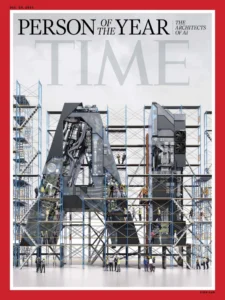
    time-person-of-the-year-2025-peter-crowther-bc-251211-b0f419
    Uploaded by user

    Consider the example of a small e-commerce business struggling with customer service demands. With a limited team, they couldn’t provide 24/7 support, leading to customer dissatisfaction and lost sales. By implementing Lumabot’s AI-driven customer service solutions, the business transformed its operations.

    The AI was trained to handle common inquiries, track orders, and provide personalized product recommendations, drastically improving the customer experience. The result was not only enhanced customer satisfaction but also increased sales and brand loyalty.

    Benefits of AI in Customer Service

    The advantages of deploying AI in customer service are manifold:

    • 24/7 Availability: AI ensures that customer inquiries are addressed at any time, enhancing customer satisfaction and loyalty.
    • Cost Efficiency: Automating routine tasks reduces labor costs and allows businesses to allocate resources more efficiently.
    • Scalability: AI can easily scale with your business, handling increased volumes of inquiries without additional staffing costs.

    “AI is not just a tool; it’s a partner in delivering exceptional customer experiences.”

    Overcoming Challenges with AI Integration

    Despite its benefits, some businesses hesitate to adopt AI due to misconceptions. Common concerns include job displacement and the complexity of AI systems. However, AI is designed to augment human tasks, not replace them. With a thoughtful implementation strategy, AI can be integrated seamlessly.

    Here are some strategies for successful AI integration:

    1. Start Small: Begin with specific, manageable AI projects to build confidence and expertise.
    2. Invest in Training: Educate your team about AI capabilities and how to leverage them effectively.
    3. Partner with Experts: Work with providers like Lumabot, who offer comprehensive support and customization.

    “Addressing AI misconceptions is key to unlocking its full potential as a business asset.”

    Future Prospects: AI as a Catalyst for Growth

    1
    Uploaded by user

    Looking ahead, AI holds the promise of even more transformative impacts on business operations. As AI technology continues to evolve, it will open new avenues for innovation and efficiency. Businesses that embrace AI early will have a competitive edge, benefiting from advanced analytics, predictive insights, and personalized customer interactions.

    AI’s ability to learn and adapt means it can grow alongside your business, ensuring you remain at the forefront of your industry.

    “Embracing AI today sets the stage for tomorrow’s business success.”

    In conclusion, AI assistants are not just a technological trend; they are vital assets in the modern business landscape. By embracing AI, your business can not only survive but thrive in a competitive market, setting a new standard for operational excellence.

    Call to Action: Try Lumabot free for 14 days and see how AI can transform your business.

  • 5 Ways AI Boosts Your Small Business

    5 Ways AI Boosts Your Small Business

    5 Ways AI Boosts Your Small Business

    Running a small business can often feel like juggling multiple balls at once. With the integration of Artificial Intelligence (AI), you can hand over some of these tasks and focus on what truly matters. Discover how AI can streamline your operations, enhance efficiency, and elevate your business to new heights.

    Enhance Customer Service

    AI-driven chatbots enhancing customer service
    Photo by Sanket Mishra on Unsplash

    One of the most practical ways AI can benefit small businesses is by enhancing customer service. AI-driven chatbots provide 24/7 support, ensuring that your customers receive instant responses to their common queries. This not only improves customer satisfaction but also frees up your workforce to handle more complex issues.

    “AI chatbots empower small businesses by offering round-the-clock customer service.”

    With tools like Lumabot, you can easily implement these solutions to ensure your customers are never left waiting.

    Simplify Bookkeeping

    Automated financial tools for bookkeeping
    Photo by Mehdi Mirzaie on Unsplash

    Bookkeeping can be a daunting task for any small business owner, but AI simplifies this with automated financial tools. These tools track expenses, manage invoices, and reduce errors with intelligent data entry and reconciliation. By automating bookkeeping, you can focus on more strategic planning and financial oversight.

    “Automated bookkeeping is a game-changer for small businesses, reducing errors and saving time.”

    Boost Marketing Efforts

    AI analyzing customer data for marketing
    Photo by Solid Solutions en Identification SA on Unsplash

    AI can significantly boost your marketing efforts by analyzing customer data to tailor personalized marketing campaigns. Predictive analytics allows businesses to target the right audience, ensuring that your marketing budget is spent wisely. This level of personalization can enhance customer engagement and drive sales.

    “Personalized marketing through AI is not just effective; it’s essential for small business growth.”

    Explore Lumabot’s marketing solutions to see how AI can transform your outreach strategies.

    Optimize Inventory Management

    AI optimizing inventory management
    Photo by Efe Kurnaz on Unsplash

    Inventory management is another area where AI excels. By forecasting demand, AI ensures that you maintain optimal stock levels, avoiding the pitfalls of overstocking or stockouts. Automated reordering processes further streamline operations, saving you time and reducing waste.

    Effective inventory management can make or break a business, and AI provides a practical solution to this common challenge.

    Streamline Recruitment

    AI streamlining the recruitment process
    Photo by Andrea Qoqonga on Unsplash

    Recruitment can be time-consuming, but AI simplifies this process by scanning resumes and shortlisting the best candidates. This reduces the time spent on manual screening and sorting, allowing you to focus on interviewing and selecting the right fit for your company culture.

    By streamlining recruitment, AI helps you build a strong team capable of driving your business forward.

    Embracing AI in your business operations can lead to increased efficiency and more time to focus on growth. By automating routine tasks, you can concentrate on strategic planning and innovation. Don’t miss out on the opportunity to leverage AI for your business success.

    Try Lumabot free for 14 days and experience the transformation that AI can bring to your small business.

  • Is AI Overkill Hurting Your Business?

    Is AI Overkill Hurting Your Business?

    Is AI Overkill Hurting Your Business?

    In the race to modernize, businesses are increasingly turning to AI solutions. But is there a tipping point where too much AI can actually harm your business? Let’s explore the balance between technology and the irreplaceable human touch.

    The Rise of AI in Small Businesses

    AI transforming small businesses
    Photo by Vitaly Gariev on Unsplash

    AI technology has become a cornerstone for many small businesses seeking cost savings and efficiency. The appeal is clear—AI can handle repetitive tasks, provide data-driven insights, and offer 24/7 customer support, reshaping how businesses operate. With AI, small businesses can compete on a larger scale without the overhead costs traditionally associated with such expansion.

    The Human Touch: Why It Still Matters

    human touch in customer service
    Photo by David Trinks on Unsplash

    Despite AI’s capabilities, the human touch remains crucial. Building trust and rapport with customers requires empathy, something AI hasn’t mastered yet. Human interaction fosters relationships and loyalty, as customers value genuine connections. Empathy in customer service can soothe frustrated customers and adapt to nuanced situations that AI can’t fully comprehend.

    Signs You Might Be Over-Automating

    customer service automation pitfalls
    Photo by Juliya Zemlyana on Unsplash

    Over-reliance on AI can lead to decreased customer satisfaction, as evidenced by increased complaints. Customers may feel unheard if they’re constantly interacting with chatbots rather than humans. Additionally, team members might feel disconnected or undervalued, leading to decreased morale and productivity.

    Finding the Right Balance

    balancing AI and human roles
    Photo by Marco Bianchetti on Unsplash

    Integrating AI tools that complement rather than replace human roles is essential. Businesses should set clear boundaries for AI usage, ensuring technology enhances rather than hinders customer interactions. By strategically placing AI in roles that support human employees, businesses can achieve a harmonious balance.

    Case Studies: Success Stories and Lessons

    case study success with AI
    Photo by Markus Winkler on Unsplash

    Consider small businesses that have successfully implemented a balanced AI strategy. These businesses have seen improvements in efficiency without sacrificing customer satisfaction. Conversely, businesses that leaned too heavily on AI often struggled with maintaining personal connections, highlighting the importance of balance.

    Making the Transition Smooth

    training staff with AI tools
    Photo by AN LY on Unsplash

    Transitioning to a balanced AI-human approach requires training staff to work alongside AI tools effectively. Regularly reviewing AI performance and customer feedback ensures the AI implementation aligns with business goals. A proactive approach to AI integration prevents potential pitfalls and supports sustainable growth.

    Striking the right balance between AI and the human touch is crucial for maintaining customer satisfaction and business success. While AI can offer significant advantages, the human element remains essential in building lasting relationships.

    Try Lumabot free for 14 days